

The qualities of a good SEO agency determine whether your investment translates into actual business growth. Especially when you have 75% of users never scrolling past the first page of search results, choosing the right partner becomes critical for your success. A well-executed SEO strategy improves rankings and boosts conversions. Yet many businesses sign contracts, pay monthly retainers, and receive reports showing keyword rankings and traffic improvements. But when they look at their pipeline, nothing has changed. This piece will help you identify what separates effective agencies from those that look good on paper. You’ll find the questions to ask an SEO agency, how to review their focus on conversions versus vanity metrics, and what accountability looks like.
The Fundamental Difference: Conversion-Focused vs. Traffic-Focused Agencies

Why most agencies prioritise the wrong metrics
Traffic doesn’t equal revenue. Rankings alone won’t pay your bills. Most agencies build their entire reporting structure around metrics that look impressive in dashboards but don’t move their bottom line. They track keyword positions, organic sessions, and impressions because these numbers are easy to measure and trend upward consistently. Traditional SEO reporting has trained marketers to chase what’s easiest to measure rather than what matters. That’s the uncomfortable truth. Research shows that 80% of all searches are informational, while only 10% are transactional and 10% are navigational. Most agencies gravitate toward informational keywords because they’re easier to rank for, safer to create content around, and scale faster than conversion-focused pages. So many sites build massive top-of-funnel visibility but very little purchase intent. Your traffic grows, but your revenue doesn’t.
Understanding buying intent in keyword strategy
Search intent falls into four distinct categories that signal where users are in their buying experience. People seeking knowledge about a topic use informational keywords. Users trying to find a specific website use navigational keywords. Someone researching brands or products uses commercial keywords. Transactional keywords show the strongest intent to buy or complete an action. Transactional and commercial keywords represent bottom-of-funnel opportunities where users are ready to act. These buyer keywords often have lower search volume than informational terms, but they convert at rates 10x higher. More precise keywords signal transactional intent, while broader terms indicate commercial research.
The business effect of conversion-first approaches
Conversion-first SEO flips the traditional model by prioritising keywords that drive revenue rather than just traffic. You don’t need as many visitors to generate more pipeline when you target the right intent and design content for conversion from day one. One case study showed a 5x increase in organic leads while traffic declined, proving that quality trumps quantity. Focusing on conversion rates yields 30-50% higher performance from organic traffic compared to standalone SEO programs that ignore post-click behaviour.
How to identify if an agency focuses on real ROI
Good SEO agencies track conversions, leads, demos, and sales instead of just rankings and sessions. Ask potential partners which metrics they review monthly to decide where to invest and optimise. Agencies that understand ROI will discuss revenue attribution, customer lifetime value, and lead conversion rates rather than just keyword positions. Another critical question to ask an SEO agency is how they assign value to conversions and measure which keywords drive the most valuable customer actions. They’re chasing vanity metrics instead of business outcomes if they can’t state their strategy beyond “we’ll improve your rankings”.
What Great SEO Agencies Actually Spend Their Time On
Keyword research and strategic targeting
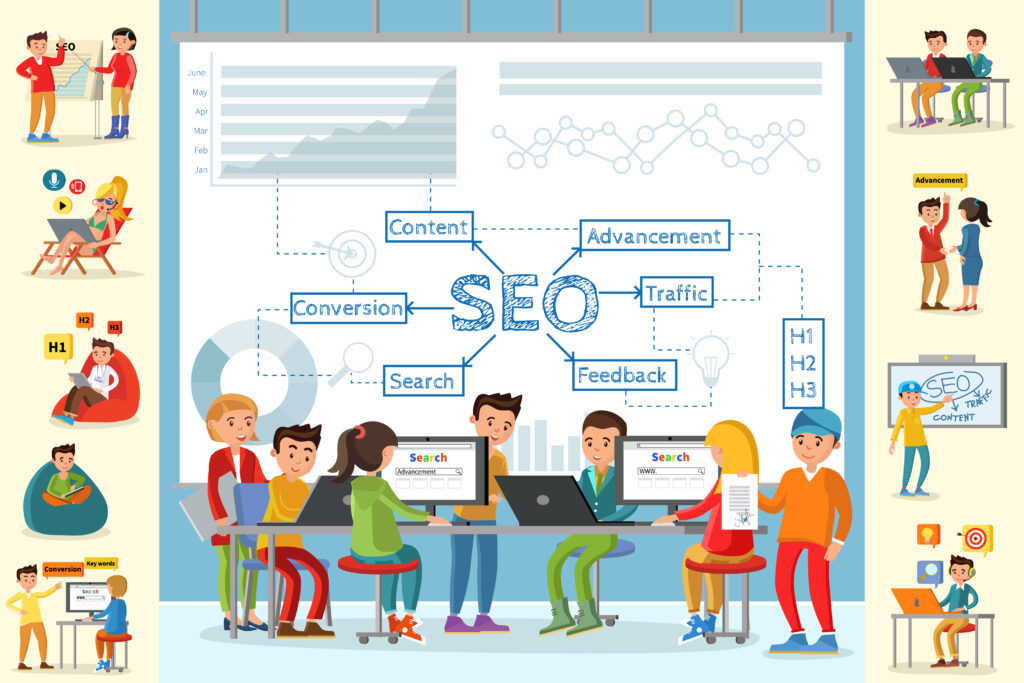
Professional agencies start by analysing search behaviour to find terms that potential customers use. This goes beyond search volume to understand competition levels and search intent at each stage of the buyer trip. The focus changes toward long-tail, high-intent phrases that drive conversions rather than generic high-volume terms. Agencies map keywords to specific funnel stages, from research to purchase decisions. Content matches what users need at each point.
Creating dedicated pages for high-value keywords
A good SEO agency builds dedicated landing pages for each high-value keyword instead of cramming multiple terms onto a single page. Load one page with keywords for landscaping, paving, garden fixtures, and decking, and you split the ranking authority into quarters. Each term gets only 25% ranking power. Creating individual pages focused on single keyword families gives each page 100% keyword authority. Google won’t get confused about the page’s purpose.
Product and service copywriting expertise
Blog content creation is different from product and service copywriting. Copywriters make content say more in fewer words and deliver messages that convert visitors into customers. Your main service pages need efficient content with strategic graphics and clear calls-to-action, not lengthy blog-style articles. Quality agencies understand this difference and optimise landing pages for lead generation and conversions.
Technical SEO and link building as supporting elements
Technical optimisation and link-building function as foundational support rather than main activities. Agencies handle site speed, mobile responsiveness, crawlability, and structured data. Search engines can then index content without issues. Link building focuses on earning high-quality backlinks from authoritative websites through digital PR and content promotion. These elements create the infrastructure that allows conversion-focused content to perform well.
The content creation vs. content brief difference
Many agencies provide detailed content briefs rather than writing content themselves. These strategic documents outline how content should be written to meet search intent and ranking requirements. Briefs include the main keywords, search intent explanation, H2/H3 structure, topics to cover, internal linking suggestions, and competitor context. This approach lets agencies focus on strategy while collaborating with in-house teams or specialised writers for execution.
Accountability and Proving Results That Matter

Tracking conversions, not just rankings
Accountability starts with measuring what affects your bottom line. The qualities of a good SEO agency include tracking form submissions, phone calls, demo requests, and actual revenue generated through organic search channels rather than fixating on keyword positions. Departments that cannot connect traffic to revenue end up with unclear return on ad spend and difficulty explaining quarterly performance to leadership. You should focus on organic traffic to marketing qualified lead rate, organic traffic to sales qualified lead rate, and revenue attributed to organic channels. One of the most important questions to ask an SEO agency is how they attribute conversions back to specific SEO efforts and whether they track customer acquisition cost for organic versus paid channels.
Understanding realistic timelines for SEO results
SEO takes three to six months to show noticeable improvements. Results might look like increases in crawled pages or moving from page five to page two for target terms during the first few months. You should start seeing measurable increases in organic traffic by months four through six. Revenue-generating results materialise between six and twelve months of consistent work. Keep in mind that achieving substantial results requires patience, as early traffic growth is often followed by a calibration period where you refine conversion rate optimisation.
Case studies with measurable business outcomes
Real case studies demonstrate tangible business effects beyond vanity metrics. One wealth management firm achieved a 326% increase in net organic keyword portfolio, coupled with an over 23% increase in Google Analytics goal completions. An audiology office saw a 245% increase in total organic keyword rankings, 396% increase in organic traffic, and 44% increase in local conversions. Another business experienced a 42.14% increase in organic traffic year over year with high rankings for non-branded keywords. These outcomes connect SEO activities to pipeline growth and revenue generation.
Regular reporting on leads, demos, and sales
Agencies that work provide regular reporting focused on business outcomes rather than participation trophies. Your reports should answer specific questions each month, such as which pages drove revenue and what optimisations were applied to those pages. Your SEO report lacks strategic value if it doesn’t connect a ranking to actual pipeline dollars. Real-time dashboards with executive-level views showing customer acquisition cost, lifetime value, and payback period let you catch problems before they cost a quarter. Agencies that demonstrate true accountability segment organic traffic by buyer intent and track which high-intent pages increase margin contribution.
Evaluating Agency Credentials and Fit for Your Business

Industry-specific experience and market knowledge
Agencies with proven track records in your specific industry understand the nuances of your market and can tailor strategies. Industry-specific expertise becomes especially valuable when you have technical sectors or regulated industries where content requires specialised knowledge. So you should request case studies from previous clients in similar business profiles and ask agencies to walk you through their approach for your specific situation. Agencies that cannot demonstrate relevant experience will use your budget to learn rather than execute.
Communication style and transparency standards
Transparency builds trust and will give clients a sense of being informed about the work being done and progress toward SEO goals. Open communication helps you stay engaged in the SEO process and makes you more likely to provide valuable feedback. Agencies committed to transparency avoid confusing jargon and remain forthcoming about challenges encountered during campaigns. You should receive regular updates, including strategies implemented, tactical changes and results achieved. Strong agencies establish dedicated points of contact for both strategic and operational updates.
Pricing models and budget allocation
Monthly retainers represent the most popular pricing model and offer ongoing optimisation through fixed monthly fees. Project-based pricing allows you to address specific SEO challenges without long-term commitments. Hourly rates work best for consultations or shorter-term projects. Larger agencies charge higher fees due to experience and client history, while agencies specialising in specific industries command premium pricing. Agencies retaining clients for two years or more charge the highest fees.
Cultural fit and long-term partnership potential
The right agency should share similar values and work ethic for smooth and productive collaboration. Long-term partnerships allow agencies to develop a deep understanding of your business, values and objectives. This alignment helps create individual-specific strategies based on your unique business model rather than generic tactics. Agencies invested in long-term relationships focus on building solid foundations and scaling strategies for consistent results.
Conclusion
The qualities of a good SEO agency ended up determining whether your investment generates actual revenue or just impressive dashboards. So your focus should be on agencies that prioritise conversions, track ground business outcomes and demonstrate transparent accountability. Ask the right questions about how they measure ROI, attribute revenue to organic efforts and optimise for buying intent rather than just traffic volume. Partner with an agency that treats SEO as a revenue channel rather than a ranking game. You’ll see meaningful results that affect your bottom line.
Key Takeaways
The best SEO agencies focus on driving revenue, not just traffic, making the difference between impressive reports and actual business growth.
- Prioritise conversion-focused agencies over traffic-focused ones – 80% of searches are informational, but transactional keywords convert 10x higher despite lower volume.
- Demand accountability through revenue metrics, not rankings – Track leads, demos, and sales attribution rather than keyword positions and organic sessions.
- Look for agencies that create dedicated pages for high-value keywords – Single-focus pages get 100% ranking authority versus 25% when cramming multiple terms together.
- Expect realistic timelines of 6-12 months for revenue results – Initial improvements appear in 3-6 months. Still, a significant business impact requires patience and consistent optimisation.
- Evaluate industry expertise and transparent communication – Agencies with relevant experience understand your market nuances and provide clear reporting on business outcomes, not vanity metrics.
When evaluating potential partners, remember that the right agency treats SEO as a revenue channel, not a ranking game. They’ll discuss customer acquisition costs, lifetime value, and conversion attribution rather than just keyword positions and traffic growth.
FAQs
Q1. What should I look for when choosing an SEO agency? Look for agencies that demonstrate expertise through proven results and case studies with measurable business outcomes. Prioritise those that focus on conversion metrics like leads and sales rather than just traffic numbers. Transparency in reporting, realistic timeline expectations, and tailored strategies specific to your business needs are essential qualities. Additionally, ensure they use ethical white-hat SEO practices and maintain clear communication throughout the partnership.
Q2. How long does it typically take to see results from SEO efforts? SEO generally takes three to six months to show noticeable improvements in rankings and traffic. During the first few months, you might see increases in indexed pages or movement from lower to higher search result pages. More significant results, including measurable revenue impact, typically materialise between six and twelve months of consistent optimisation work. Patience is essential, as SEO is a long-term investment that builds momentum over time.
Q3. Why do some agencies focus on traffic instead of conversions? Many agencies prioritise traffic metrics because they’re easier to measure and consistently show trends in reports upward. Since 80% of searches are informational rather than transactional, agencies often target these easier-to-rank keywords that generate high traffic volumes but low conversion rates. This approach looks impressive in dashboards but doesn’t necessarily translate to revenue growth or meaningful business outcomes for clients.
Q4. What’s the difference between informational and transactional keywords? Informational keywords attract users seeking knowledge about a topic. In contrast, transactional keywords indicate someone ready to make a purchase or take action. Although transactional keywords typically have lower search volumes, they convert at rates up to 10 times higher than informational terms. Focusing on transactional and commercial keywords targets bottom-of-funnel opportunities where users are closer to making buying decisions.
Q5. How should an SEO agency prove its value and accountability? A quality agency should track conversions, leads, demo requests, and actual revenue generated through organic search rather than just keyword rankings. They should provide regular reports connecting SEO activities to pipeline growth and demonstrate how they attribute conversions back to specific efforts. Look for agencies that discuss customer acquisition costs, lifetime value, and revenue attribution, and can show case studies with tangible business impact beyond vanity metrics.