

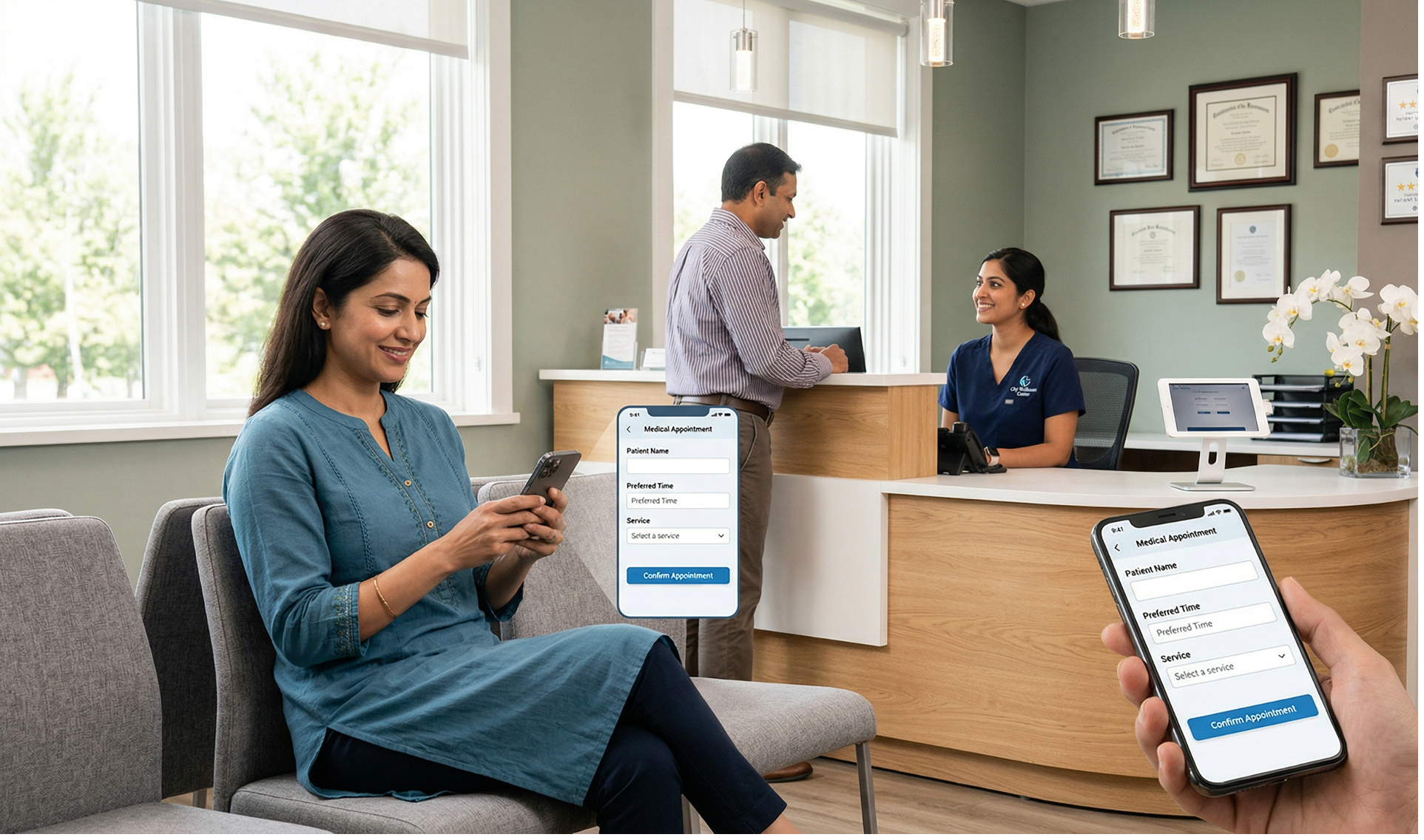
The average hospital website conversion rate hovers between just 1-3%. For every 100 visitors to your site, only one to three book an appointment or take meaningful action. Healthcare conversion optimisation can change this outcome. Digital competition grows, and implementing proven healthcare CRO strategies has become essential for practise growth. These strategies range from patient booking funnel optimisation to healthcare landing page CRO. Partnering with a Healthcare Digital Marketing Agency can improve these efforts further by integrating conversion tactics into your broader patient acquisition strategy.
This piece will show you exactly how to turn your website visitors into booked patients through useful optimisation techniques.
Key Takeaways
Healthcare websites typically convert only 1-3% of visitors into patients, but strategic optimisation can boost this by 200-500%, dramatically increasing patient acquisition without additional advertising spend.
- Mobile-first design is essential as over 60% of healthcare searches happen on mobile devices
- Trust signals like patient testimonials, doctor credentials, and security badges directly impact conversion decisions
- Page loading speed under 2 seconds prevents the 32% bounce rate increase that occurs with slower sites
- Clear calls-to-action and simplified booking funnels remove friction that causes patient abandonment
- A/B testing and heatmap analysis reveal exactly where patients struggle in their journey to booking
The financial impact proves substantial: with average patient lifetime values reaching ₹90000 to ₹200000, every conversion improvement translates directly to significant revenue growth. Top-performing practises achieve 21.1% conversion rates, seven times the industry average, demonstrating the massive potential for improvement through systematic optimisation.
Understanding Healthcare Website Conversion Optimisation
What Counts as a Conversion in Healthcare
Understanding what qualifies as a conversion shapes your whole optimisation approach. Conversion actions extend beyond just appointment bookings in healthcare. A conversion represents any measurable step that moves a visitor closer to becoming a patient.
Phone calls from new patient numbers listed on your website signal direct interest. Form submissions demonstrate participation, whether for appointment requests or general questions. Other valuable conversions include chatbot sessions where visitors leave contact information, text message interactions for two-way communication, patient portal registrations, and even clicks on directions for urgent care facilities. Each action reveals different levels of patient intent and readiness. These micro-conversions provide insight into your website’s effectiveness when tracked. A visitor downloading a patient information packet might not book right away. Yet, this action indicates genuine interest worth nurturing through follow-up communication.
Why Most Healthcare Websites Fail to Convert Visitors
Most healthcare websites struggle not from a lack of traffic but from an absent conversion strategy. Research shows that 77% of patients begin their healthcare experience online. Yet, the gap between finding a clinic and choosing it continues to widen. Unclear next steps represent one of the biggest conversion failures. Eye-tracking studies reveal that users spend most of their attention above the fold. Calls-to-action sit buried below critical sections and get ignored. Patients won’t take action if they can’t see an obvious path forward.
Page speed affects whether visitors stay or leave. As page load time increases from 1 to 3 seconds, bounce rates jump by 32%. Google considers speed a ranking factor, meaning slow websites lose both visibility and conversions at once. Trust remains another critical barrier. Uncertainty persists without visible doctor profiles, qualifications, and experience. The Edelman Trust Barometer shows that expert authority and transparency substantially influence trust-based decisions in healthcare. 87% of consumers read online reviews for local businesses, including healthcare providers. Missing reviews leave patients questioning safety and outcomes.
Poor user experience undermines credibility. Outdated design, confusing navigation, and a lack of mobile optimisation frustrate visitors. Websites built to inform rather than guide leave patients feeling lost instead of supported. Sites that push appointments without first resolving doubt make patients feel pressured rather than guided. Healthcare decisions carry emotional weight long before logic enters the equation. Fear, doubt, and anxiety shape behaviour more than credentials or technology. Working with a Healthcare Digital Marketing Agency helps practises address these psychological barriers through strategic conversion optimisation that builds trust and guides patients through their decision-making experience.
The Business Impact of Improved Conversion Rates
The financial implications of conversion optimisation prove substantial. Medical practises lose up to 90% of potential patients through inefficient lead management systems. Average patient lifetime values reach ₹90000 to ₹200000, and every lost lead represents revenue left unclaimed. Top-performing practises achieve conversion rates of 21.1%, nearly seven times the industry average. This gap demonstrates massive potential for improvement. Conversion that increases from 3.2% to just 10% more than triples patient acquisition efficiency. A practice receiving 100 leads monthly sees this improvement translate to 7 additional new patients per month, or 84 a year.
Healthcare organisations spend ₹1000-₹1500 bringing visitors to websites but only ₹200 on converting those visitors into patients. This imbalance leaves a substantial chance on the table. Healthcare websites can experience 200-500% improvements in conversion rates when done right, translating to more patients without additional advertising spend.
Optimise Your Website for a Seamless Patient Experience
Patient experience determines whether visitors complete actions or abandon your site. Over 60% of healthcare searches happen on mobile devices, yet many practises still focus on desktop design. This mismatch creates friction that drives potential patients elsewhere.

Design for Mobile-First Patient Interactions
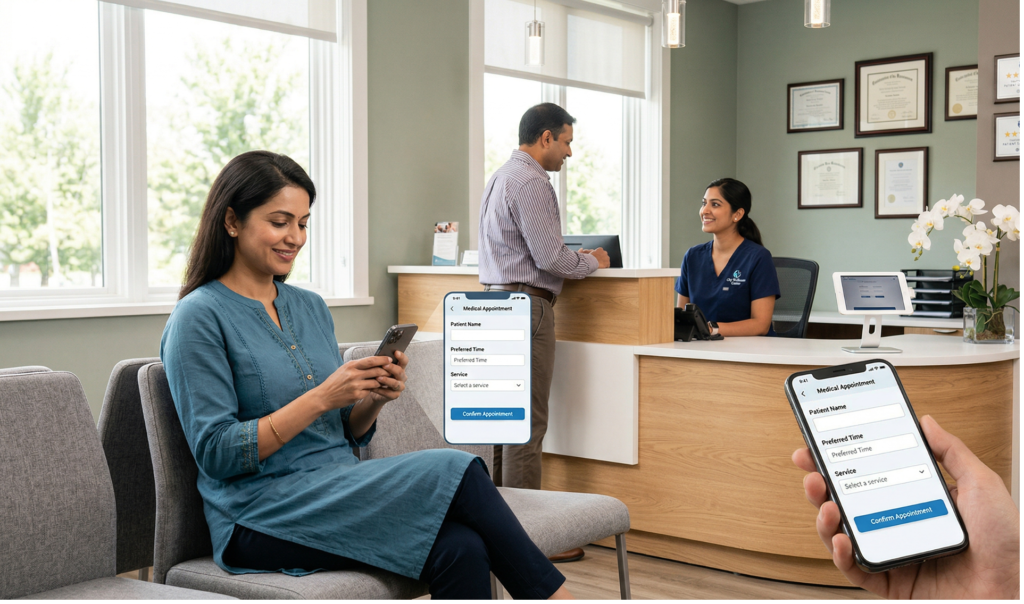
Mobile-first design starts with the smallest screen and builds up for larger displays. This approach keeps critical features available, whatever device people use. Research shows that 74% of users return to mobile-friendly websites, whilst 52% become less likely to participate with a business after a poor mobile experience. Your mobile interface needs touch-friendly elements with tap targets sized correctly. Text must stay readable without zooming. Forms should make completion easier on smaller screens. Click-to-call functionality matters especially for urgent situations where patients need to be contacted right away. 42% of patients prefer scheduling appointments online rather than calling, which makes mobile booking systems essential for conversion.
Google uses mobile versions of content for indexing and ranking. Sites without mobile optimisation face lower search visibility and reduced organic traffic before conversion efforts even begin. Partnering with a Healthcare Digital Marketing Agency can help integrate mobile-first design with broader patient acquisition strategies and ensure your site performs well across search visibility and conversion metrics.
Improve Page Loading Speed
Speed affects whether patients stay or leave. Pages must load in under 2 seconds for optimal rankings and patient experience. When load times increase from 1 to 3 seconds, bounce rates jump by 32%. AI tools and search engines both favour fast websites, with most AI bots moving on if sites exceed two-second loading times. Image compression preserves quality whilst reducing file size. Browser caching helps pages load instantly for repeat visitors. Lightweight design frameworks keep sites running smoothly, and optimised code removes unnecessary elements that slow performance. Patients expect information instantly. Delays signal unreliability before they even read your content.
Simplify Navigation and Information Architecture
Patients arrive with a mission and seek answers rather than institutional history. They need simple language and clear wayfinding for smoother experiences. Navigation must answer fundamental questions: What section am I in? What other information exists about this topic? Where can I go next? Click-to-open dropdown menus work better than hover-to-open options, especially for elderly or medically compromised audiences. Group related actions together and place core functions like finding doctors, making appointments, and paying bills front and centre. Avoid overloading menus with excessive links that create confusion.
Your logo should function as a secondary homepage link and enable quick navigation back to the main entry point, whatever the current page location. Search bars within menus help users find specific information without clicking through multiple navigation levels.
Remove Friction from the Patient Booking Funnel
Every unnecessary step represents another chance for patients to abandon the process. Automated appointment reminders reduce no-shows through SMS and email notifications sent when patients book and again one day before appointments. Online scheduling allows 24/7 booking without requiring phone calls to front offices. Provide multiple contact methods, including phone, email, and contact forms. Add chat if you can staff it well. Display insurance information prominently, as cost uncertainty stops people from proceeding. Offer guidance for those overwhelmed by options and clarify telehealth versus in-person availability upfront. Optimised payment processes with transparent pricing and multiple payment methods reduce abandonment at the final conversion stage.
Build Trust and Credibility with Your Visitors
Trust barriers prevent conversions even when your website functions perfectly. So, 92% of healthcare consumers rely on online reviews before choosing their healthcare providers. Potential patients abandon your site for competitors who demonstrate trustworthiness more effectively without visible credibility markers.

Display Patient Testimonials and Reviews
Patient testimonials provide social proof that influences decision-making more powerfully than marketing claims. 84% of patients trust online reviews as much as personal recommendations. This trust extends to multiple review platforms like Google, Healthgrades and Vitals, which shape patient perceptions through verified experiences. Third-party review platforms offer more credibility than self-hosted testimonials because patients recognise independent verification. Video testimonials create stronger emotional connections than text alone and allow potential patients to see sincerity in expressions and hear conviction in voices. These visual elements humanise your practise and demonstrate real outcomes rather than theoretical promises.
Strategic placement matters just as much. Feature testimonials on your homepage, service pages and throughout the patient experience. Organise reviews by specific treatments or conditions so visitors find relevant experiences quickly. 78% of patients believe that a provider’s response to reviews indicates genuine care—transparency and commitment to improvement show through when you engage with both positive and negative feedback.
Showcase Doctor Credentials and Expertise
Medical credentials represent rigorous education, hands-on training, licensing exams and ongoing certifications that qualify physicians to provide care. Display board certifications, hospital affiliations and medical society memberships on provider pages. These elements build instant credibility, especially when you have recognisable logos rather than text lists. The credential experience has bachelor’s degrees, four years of medical school earning MD or DO qualifications, residency programmes lasting 3-7 years and licensing examinations like USMLE or COMLEX-USA. Board certification demonstrates commitment to specific specialities and adds trust layers that patients seek when requiring specialised care.
Use Security Badges and Certifications
HIPAA compliance badges signal that your website protects patient information. Display these security markers alongside SSL certificates and medical content certifications. The AACI Medical Content Certification programme verifies that health information meets transparency, accuracy and professional ethics standards.
Add Trust Signals Throughout Your Site
Google’s E-E-A-T framework evaluates Experience, Expertise, Authoritativeness and Trustworthiness. Partnering with a Healthcare Digital Marketing Agency helps implement these trust signals. It improves both search visibility and patient acquisition through credible content authorship, peer validation through review counts and transparent disclosure of credentials. These elements reduce perceived risk and increase conversion likelihood.
Create High-Converting Healthcare Landing Pages
Landing pages serve a fundamentally different purpose than your main website. General pages cover multiple topics. Each landing page targets one specific campaign with a singular focus. This targeted approach increases conversion by eliminating distractions and guiding visitors toward a single action, whether booking consultations or downloading health resources.
Write Patient-Centred Messaging
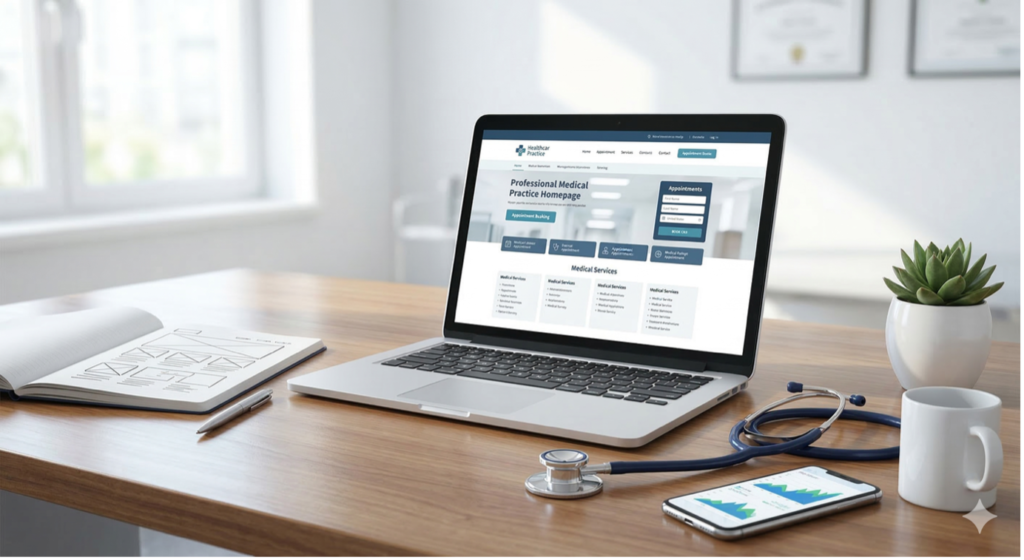
Visitors spend an average of just 47 seconds per page view. This brief window demands scannable content that communicates value instantly. Therefore, structure your copy using short paragraphs that highlight patient benefits rather than institutional achievements. Address specific pain points, whether easing joint discomfort or managing chronic conditions. Working with a Healthcare Digital Marketing Agency helps craft patient-centred messaging that connects clinical expertise with patient needs. This improves both engagement and appointment booking rates through healthcare landing page CRO strategies.
Use Clear and Compelling Calls-to-Action
Websites with compelling CTAs achieve 121% higher click-through rates than those without clear prompts. Your call-to-action must specify the exact next step using action-oriented language like “Book Your Appointment” or “Schedule a Free Consultation”. Position CTAs above the fold where visitors see them without scrolling. Design buttons with contrasting colours that stand out visually and maintain brand consistency. Keep wording concise yet benefit-focused. Emphasise what patients gain rather than what you want them to do.
Optimise Forms for Quick Completion
Minimise form fields to essential information only. Research indicates single-column layouts prove easier to complete than multi-column formats. Use radio buttons instead of dropdown menus to select faster. 92.3% of internet users access websites through mobile phones. Ensure forms function naturally on smaller screens. Display SSL certificates and security badges to address privacy concerns that cause form abandonment.
Provide Multiple Contact Options
Different patients prefer different communication methods. Display clickable phone numbers for contact. Include simple contact forms for those preferring asynchronous communication. Think about live chat for quick questions, especially when you have after-hours periods. Multiple options prevent losing patients whose preferred method isn’t available.
Measure and Test Your Conversion Performance
Measurement transforms assumptions into applicable information. Healthcare conversion optimisation remains guesswork rather than a strategy without tracking performance data.
Track Key Healthcare CRO Metrics
Conversion rate shows the percentage of visitors who complete desired actions. Bounce rate reveals visitors leaving after viewing only one page. Session duration indicates engagement depth. Form starts versus form abandonment rates expose friction points in booking processes. Monitor cost per acquisition to understand patient acquisition efficiency. Weekly tracking of these metrics provides visibility into what drives patient actions.
Run A/B Tests on Critical Elements
A/B testing compares two webpage versions to determine which performs better at achieving pre-specified outcomes. Healthcare organisations use this method to test headlines, imagery and calls-to-action. Testing provides empirical data supporting digital experience changes rather than relying on intuition. To cite an instance, changing the button colour from blue to orange increased form submits by 25%. Multiple tests can be deployed in parallel or in sequence and allow iterative improvements. Partnering with a Healthcare Digital Marketing Agency helps implement systematic testing programmes that refine patient acquisition funnels through data-driven healthcare CRO strategies.
Analyse Patient Journey Drop-Off Points
Funnel analysis identifies where patients abandon their trip. High drop-off rates signal issues at specific conversion stages. Tracking unique visitors, bounce rates, and goal conversion rates reveals engagement patterns. These drop-offs help pinpoint whether problems stem from poor user experience, broken links or unclear next steps.
Use Heatmaps to Understand Visitor Behaviour
Heatmaps visualise where users click, scroll and spend time. Click maps reveal what attracts attention. Scroll depth measures how far users move down pages. These tools expose friction points and confusion areas that traditional analytics miss. Session replays combined with heatmaps show where patients struggle during appointment booking.
Conclusion
Right now, you have everything needed to transform your healthcare website from a passive information hub into an active patient acquisition engine. Most practises struggle with 1-3% conversion rates, yet the strategies outlined above can boost performance by 200-500% when you implement them. Remove friction from your patient booking funnel and build trust through testimonials and credentials. Test your landing pages in a systematic way and monitor the metrics that matter. Start with the biggest pain points your analytics identify. Fix mobile responsiveness first, then address page speed and unclear calls-to-action. Track your progress weekly and adjust based on real visitor behaviour rather than assumptions. Conversion optimisation delivers compounding returns. Small improvements create more patients without additional advertising spend. This makes the effort worthwhile for your practise’s growth over time.
FAQs
Q1. What is considered a conversion on a healthcare website? A conversion is any measurable action that moves a visitor closer to becoming a patient. This includes appointment bookings, phone calls from new patients, form submissions for enquiries, chatbot interactions where contact details are provided, patient portal registrations, and even clicks on directions to your facility. Each action indicates different levels of patient interest and readiness to engage with your practise.
Q2. Why do healthcare websites typically have low conversion rates? Healthcare websites often fail to convert because they lack clear calls-to-action, have slow page loading speeds, and don’t build sufficient trust with visitors. Many sites are designed to inform rather than guide patients through a decision-making journey. Additionally, poor mobile optimisation, confusing navigation, and missing trust signals like patient reviews and doctor credentials create barriers that prevent visitors from taking action.
Q3. How much can improved conversion rates impact a medical practise financially? The financial impact is substantial. With average patient lifetime values ranging from ₹90000 to ₹200000, every lost lead represents significant revenue. Increasing conversion rates from 3.2% to 10% can more than triple patient acquisition efficiency. For a practice receiving 100 leads monthly, this improvement translates to 7 additional new patients per month, or 84 annually, without increasing advertising spend.
Q4. What are the most important elements of a high-converting healthcare landing page? High-converting landing pages feature patient-centred messaging that addresses specific pain points, clear and compelling calls-to-action positioned above the fold, simplified forms with minimal required fields, and multiple contact options including phone, email, and chat. The page should focus on a single goal, use scannable content with short paragraphs, and display trust signals like security badges and patient testimonials prominently.
Q5. Which metrics should healthcare practises track to measure conversion performance? Key metrics include conversion rate (percentage of visitors completing desired actions), bounce rate (visitors leaving after one page), session duration, form abandonment rates, and cost per acquisition. Additionally, tracking funnel drop-off points helps identify where patients abandon their journey. Using heatmaps and session replays provides visual insights into visitor behaviour, revealing friction points that traditional analytics might miss.