


Digital marketing for small clinics isn’t optional anymore when 86% of patients research online before booking an appointment. Search engines drive three times as many visitors to hospital websites than other sources, yet most small clinics remain invisible in local searches. Becoming skilled at small clinic marketing strategies like clinic SEO India techniques and local patient acquisition methods can change your practice. Clinic online visibility affects your bottom line, as 44% of patients who research hospitals on mobile devices schedule appointments. Healthcare marketing for doctors doesn’t require massive budgets either. This piece walks you through practical digital marketing clinic strategies that deliver ground results for your practice.
Key Takeaways
Small clinics can compete effectively with large hospital chains through strategic digital marketing without requiring massive budgets. Here’s what matters most:
- Claim your digital real estate first: Set up a mobile-optimized website and Google Business Profile immediately—77% of patients search for doctors online, and complete profiles rank significantly higher in local searches.
- Reviews drive patient decisions: 93% of consumers trust online reviews as much as personal recommendations, and patients won’t consider providers with ratings below 4.0 stars—automate review requests after appointments for best results.
- Local SEO delivers measurable ROI: SEO leads close at 14.6% compared to just 1.7% for traditional marketing, making location-specific keywords and service pages your most cost-effective patient acquisition strategy.
- Track what matters for growth: Focus on conversion rates, cost per acquisition, and appointment sources rather than vanity metrics—phone calls generate 40-60% of healthcare conversions, so implement call tracking.
- Start small and scale strategically: Begin with Google Ads budgets as low as ₹42,190 monthly, geo-target within 5-15 km of your clinic, and measure results over 3-4 months before expanding efforts.
The bottom line: Digital marketing levels the playing field for small clinics. Consistency in your online presence, patient-focused content, and data-driven decisions will attract more patients than traditional methods while keeping costs manageable.
Why Small Clinics Need Digital Marketing Today

Changing patient behavior and online search
Patient expectations have changed dramatically. Search behavior shows that 77% of patients now look for doctors online either often or sometimes. Furthermore, 87% of internet users seek health information on the web. This behavioral change means your prospective patients form opinions about your clinic before they ever walk through your door. The numbers reveal an even more striking pattern. More than half of consumers (54%) have self-diagnosed medical conditions based on information they got online. Search engines process 6.75 million health-related queries every single day. Hence, patients turn to Google first and their insurance directory second when they experience symptoms or need medical care. Your clinic’s online visibility during these critical search moments determines whether patients think over your practice or move on to competitors.
Review culture has become powerful. Online reviews now carry as much weight as personal recommendations, with 93% of consumers viewing them as a key resource to make decisions. Patients read an average of 6 to 10 reviews before choosing a provider. More than half won’t even think over a healthcare provider with an average star rating below 4.0.
Competition from large hospital chains
Large hospital systems continue aggressive expansion through acquisitions of standalone hospitals and physician practices. These corporate entities bring sophisticated technology, vast capital reserves and professional marketing teams. Large chains substantially outspend small clinics in marketing efforts because of their resources. The consolidation trend creates an uneven playing field. Hospital systems invest in AI-powered chatbots and app-based scheduling while many small practices still rely on traditional walk-in models. This gap in digital capabilities puts independent clinics at risk of being outperformed.
Economical growth opportunities
Digital marketing clinic strategies offer small practices a path to compete. While 62% of healthcare practices allocate only 1-5% of their revenue to marketing, smart digital tactics deliver superior returns. SEO leads close at a remarkable 14.6% rate compared to just 1.7% for traditional outbound leads. Small clinic marketing through local SEO and Google Business profiles doesn’t require massive budgets. These healthcare marketing approaches for doctors allow you to punch above your weight class online. Digital channels provide measurable results and let you track every dollar spent. You can adjust strategies based on actual patient acquisition data.
Building Your Clinic’s Digital Foundation

Setting up a professional website that converts
Your clinic’s website serves as the digital front door where first impressions form within three seconds. Mobile responsiveness is non-negotiable, seeing that 60% of healthcare searches now happen on mobile devices. Google prioritizes mobile-first indexing. Responsive design is everything in both patient acquisition and search visibility.
Patient decisions get affected by page speed. Load times exceeding three seconds increase bounce probability by 32%. Compress images, minimize code, and choose quality hosting to keep your site fast. Trust signals that reduce patient anxiety matter just as much. Display physician credentials, patient testimonials with consent, security badges, and authentic photos of your actual facility rather than stock images. Every page needs clear calls-to-action for appointment booking placed prominently, with clickable phone numbers and simple online scheduling forms.
Claiming and optimizing your Google Business Profile
Visit business.google.com to claim your listing. Google sends a verification code by postcard to your clinic address within 5-7 days, though some qualify for faster phone or email verification. Complete every field once verified. Clinics with complete profiles rank higher than those with missing information. Choose your most specific primary category and add up to 9 secondary categories. Your name, address, and phone number must match your website exactly, as even small differences like ‘Road’ vs ‘Rd.’ hurt rankings.
Getting your first patient reviews
Reviews work as a ranking factor, with 90% of patients using them to assess physicians and 80% trusting them as much as personal recommendations. Automate review requests right after appointments when experiences remain fresh. Reviews see an 8-10% increase in response rates midweek and 5% higher in mornings versus afternoons. Text or email requests should provide direct links to your Google review page to remove friction. Respond to all reviews within 24-48 hours.
Creating consistent online listings
NAP consistency (Name, Address, Phone) across directories makes up about 7% of local SEO ranking factors. Search engines and patients both get confused by inconsistent information. Google may view variations as separate businesses. Claim your profiles on Google, Healthgrades, Yelp, and relevant healthcare directories. Use the same formatting everywhere.
Local Patient Acquisition Strategies That Work
Clinic SEO for local search visibility
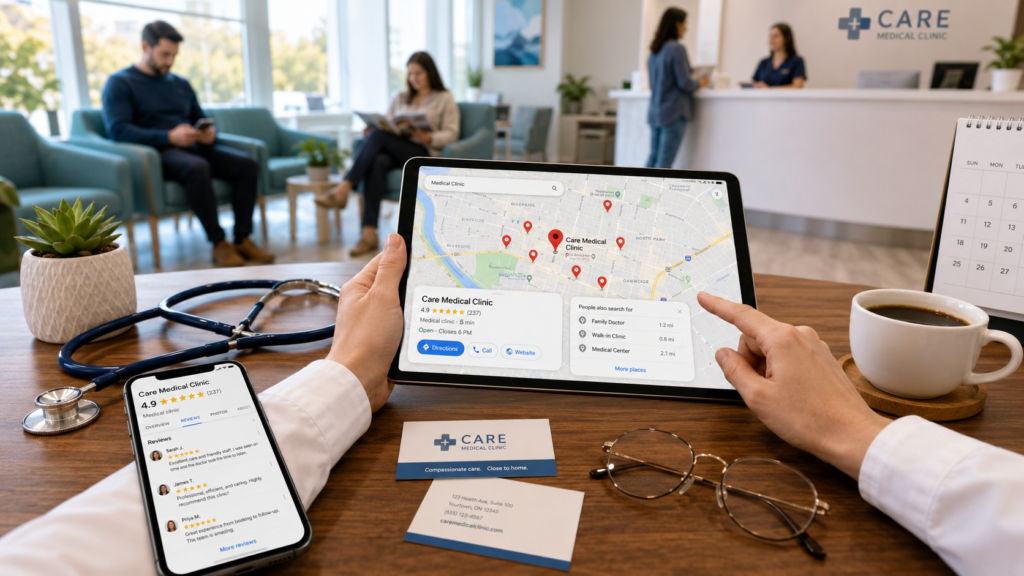
Local search optimization targets patients who are actively seeking care in your area. Location-specific keywords like “pediatrician in [city name]” or “clinic near [neighborhood]” should appear naturally in your website content, meta descriptions and headings. Separate service pages work best for each treatment you offer. Explain the problem treated, benefits and treatment process. Search engines get more pages to rank and patients find exactly what they need. Blog content should address local health concerns such as seasonal disease prevention or managing conditions specific to your climate. Mobile optimization remains critical since most local searches happen on smartphones. Schema markup helps search engines understand your practice details, including services, hours and reviews.
Using social media to connect with your community
Social media platforms offer creative ways to address patient questions and build trust without expensive advertising. Facebook reaches the broadest audience with 68% of U.S. adults using it. Instagram connects with younger demographics through visual content. Educational content related to your specialty, health tips and behind-the-scenes glimpses of your team make great posts. Patient testimonials substantially boost credibility. 92% of consumers read online reviews before purchasing and 88% trust them as much as personal recommendations. Comments deserve responses within 24 hours to demonstrate attentiveness. Want your small clinic to compete online? Let ASK Network create a patient growth strategy for your practice.
Running targeted ads on a small budget
Google Ads and Facebook Ads deliver immediate visibility when patients search for care. Budgets as low as ₹42,190 monthly work well when you focus on one service or location rather than spreading spend thin. Geo-targeting shows ads only within 5-15 km of your clinic and can potentially cut wasted spend by 63%. High-intent keywords like “pediatrician near me” or “clinic open now” should be your targets. Lookalike audiences from your patient email list work well on Facebook. Ads should run only during business hours so patients can call right away.
Email marketing for patient retention
Email delivers individual-specific communication directly to patient inboxes with open rates of 21.33% in industries of all types, higher for healthcare. Appointment reminders reduce no-shows. Educational content about managing chronic conditions and preventive care reminders keep patients engaged. Your list should be segmented based on patient demographics, medical history or services used to make messages relevant. Quarterly newsletters work best since 51% of patients prefer contact 2-3 times yearly. Health tips, service updates and seasonal reminders make good content. Open rates and click-through rates help you refine your approach over time.
Measuring Results and Scaling Your Efforts
Tracking appointments from digital channels
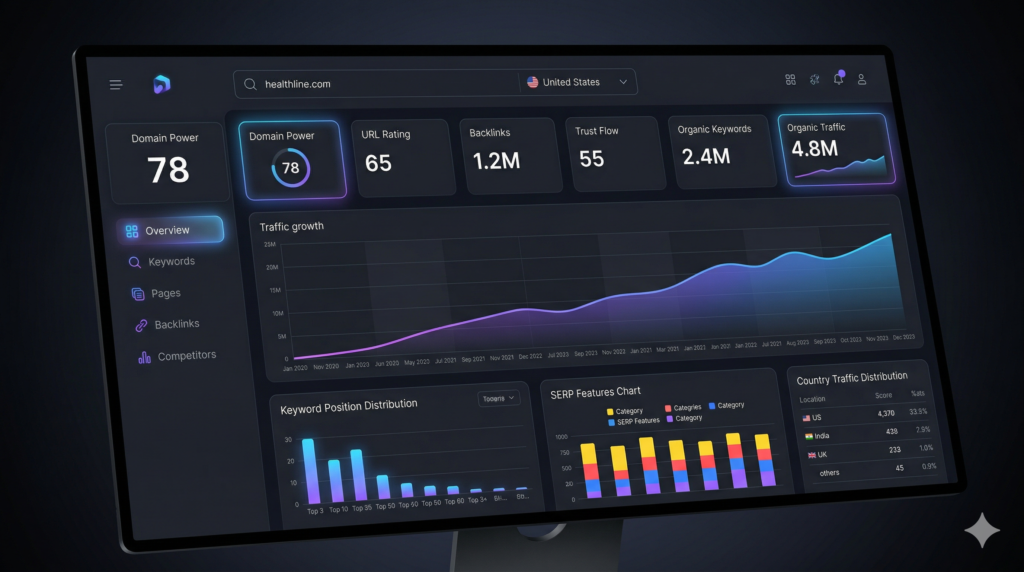
Phone calls remain your main conversion channel, with 40-60% of healthcare conversions happening by phone. Call tracking software assigns unique numbers to each marketing campaign and reveals which ads drive actual appointments. UTM parameters track online bookings by appending tracking codes to your website URLs. Mobile traffic generates 2x higher appointment requests than desktop and makes mobile-optimized scheduling a must-have. One urgent care campaign achieved 438 conversions with a 43% conversion rate over three months, while 34% of online appointments came from patients new to the healthcare system.
Understanding what metrics matter for small clinics
Focus on metrics that connect to revenue. Your conversion rate measures the percentage of website visitors who book appointments. Cost per acquisition reveals how much you spend to gain each new patient. Track your new patient conversion rate to determine if referrals translate into actual visits. Monitor your net collection rate, with 96% the industry standard. These numbers guide budget allocation decisions nowhere near as well as vanity metrics like social media followers.
When to do it yourself vs hiring help
Agencies provide tracking tools and informed guidance that help maximize marketing budgets. You should think about outsourcing when your current efforts fail to generate patient inquiries or when you lack clear ROI data. Want your small clinic to compete online? Let ASK Network create a patient growth strategy for your practice. Agencies deliver measurable returns within 3-4 months.
Conclusion
Right now, you have everything needed to compete with larger hospital chains through smart digital marketing. Your Google Business Profile and website optimization are the foundation. Build momentum with patient reviews and local SEO. Appointment sources and cost per acquisition need tracking to identify what works best for your clinic. Massive budgets are not required for digital marketing. Consistency, patient trust and measurable results matter most. Your clinic’s online visibility will grow with time and attract more patients than traditional methods could.
FAQs
Q1. Why is digital marketing essential for small clinics today? Digital marketing is crucial because 86% of patients research online before booking appointments, and search engines drive three times more visitors to healthcare websites than other sources. With 77% of patients searching for doctors online and 93% relying on online reviews as much as personal recommendations, having a strong digital presence directly impacts your ability to attract new patients.
Q2. What are the most important elements of a clinic’s digital foundation? The core elements include a mobile-responsive website that loads quickly (under 3 seconds), a claimed and optimized Google Business Profile with complete information, consistent NAP (Name, Address, Phone) across all online directories, and authentic patient reviews. These foundational elements work together to improve search visibility and build patient trust.
Q3. How can small clinics compete with large hospital chains in digital marketing? Small clinics can compete effectively through cost-efficient strategies like local SEO, targeted social media engagement, and focused advertising campaigns. While large hospitals may outspend smaller practices, digital marketing delivers superior returns—SEO leads close at 14.6% compared to just 1.7% for traditional marketing methods, allowing small clinics to achieve results without massive budgets.
Q4. What metrics should small clinics track to measure digital marketing success? Focus on metrics that directly impact revenue: conversion rate (percentage of website visitors who book appointments), cost per acquisition (spending per new patient), new patient conversion rate, and net collection rate. Additionally, track appointment sources through call tracking software and UTM parameters to identify which marketing channels generate the most patients.
Q5. How much should a small clinic budget for digital marketing? Small clinics can start with modest budgets—as low as ₹42,190 monthly for targeted ads—and many practices allocate 1-5% of their revenue to marketing. The key is focusing on high-return strategies like local SEO, Google Business Profile optimization, and patient review generation, which deliver measurable results without requiring massive investments.