


Your patient acquisition strategy for hospitals is failing if over 80% of patients are researching hospitals online before booking, yet you’re still running generic brand campaigns. Here’s the reality: the average healthcare practice has a 45% growth rate and a 48% churn rate. Hospitals lose patients faster than they acquire them. Hospital digital marketing has become the main battlefield for patient lead generation, and traditional approaches no longer deliver results. This piece walks you through a proven healthcare growth strategy that focuses on department-level marketing and hyperlocal targeting. You’ll learn systematic patient acquisition in healthcare that converts searches into appointments.
Key Takeaways
Building an effective patient acquisition strategy requires moving beyond traditional brand awareness campaigns to focus on measurable, department-specific marketing that addresses how patients actually make healthcare decisions in 2026.
- Traditional hospital marketing fails because 80% of patients research online before booking, yet most hospitals still run generic brand campaigns instead of targeting high-intent searches.
- Department-specific digital assets build trust: Create specialty landing pages, optimized doctor profiles with credentials, educational content, and implement schema markup to capture patients at decision-making moments.
- Multi-channel campaigns drive conversions: Run department-specific Google Ads, use hyperlocal targeting within 5-10 miles, and implement retargeting to reconnect with 61% of patients who abandon booking attempts.
- Optimize the inquiry-to-booking journey: Implement CRM systems, offer multi-channel appointment scheduling, create automated follow-up sequences, and reduce friction points that cause patient drop-off.
- Data-driven scaling generates ROI: Track conversion rates at each stage, allocate 30-40% of budget to paid advertising and 25-35% to SEO, then systematically scale channels delivering positive returns.
Successful hospitals invest 6-12% of gross revenue in patient acquisition programs and achieve 200-500% conversion rate improvements through sustained optimization. The key is starting with one specialty department, perfecting the complete patient journey from search to booking, then expanding based on performance data rather than assumptions.

Why Traditional Hospital Marketing Strategy No Longer Works in 2026
Most hospitals still approach patient acquisition in healthcare through image-building campaigns that prioritize creative messaging over measurable outcomes. General advertising focuses on brand visibility and emotional appeal. This approach fails at the time your objective is generating actual appointments. Direct response advertising produces measurable results by prompting specific patient actions, while generic campaigns merely promote an image without tracking effectiveness. The difference becomes clear at the time you measure ROI: direct response methods let you calculate returns down to the dime. Feel-good brand moments cannot be tracked or measured.
Generic brand awareness campaigns are failing
Healthcare marketing strategies that ignore the patient decision trip create noise instead of conversions. Patients face high-risk, emotional healthcare choices that require reassurance and trust before they act. At the time your hospital marketing strategy focuses on visibility instead of addressing these decision stages, even increased ad spend fails to generate patient lead generation. Marketing becomes effective only at the time it lines up with how patients make choices: educating before persuading and building credibility before promotion. Trust functions as the strategy itself in healthcare, not a byproduct of campaigns.
Aggregator dependency gets pricey
Relying on aggregator platforms introduces dependencies that undermine your patient acquisition strategy for hospitals and get pricey. These intermediaries charge commissions on each transaction. Net revenue reduces and sustainable ROI becomes difficult to achieve. Aggregator models dilute the direct relationship between hospitals and patients, creating increased competition among providers and reducing patient loyalty. Control over patient data remains with the aggregator platform rather than your hospital. This limits knowing how to provide customized care and make informed operational decisions. Patients using these platforms prioritize convenience over continuity of care. Lower retention rates result and weaken the long-term patient-provider relationship needed for sustained quality and satisfaction.
Patients research before deciding
Patient behavior has changed toward extensive pre-decision research. Over 60% of respondents report previously researching healthcare online, with 91.5% of those stating the research helped them make their healthcare decision. More telling, 76% of people say a positive online reputation influences their choice of doctor. Reviews now play a decisive role, with 92% of patients using online reviews at least occasionally at the time researching a new doctor or healthcare professional. 90% of healthcare consumers include online reviews as part of their decision-making process.
The factors patients prioritize reveal a gap between what hospitals promote and what drives decisions. Hospital reputation ranks as the most important factor at 61.9%, followed by location at 50.6% and primary physician recommendations at 53.2%. Patients value hospital appearance and physician credentials. Publicly reported metrics like complication or mortality rates hold low importance for patients. This disconnect explains why traditional quality-focused campaigns fail to generate hospital inquiry generation.
Competition for digital visibility has increased
Digital competition has intensified on account of changes in patient search behavior. Approximately 5% of all searches are health-related, and nearly 90% of patients research online before booking an appointment. At the time someone needs medical care, their first instinct involves searching online for information and provider options. If your hospital lacks visibility and compelling presence in digital spaces, you become invisible to patients during their most important decision-making moments.
Patients now expect consistent, professional experiences across multiple digital touchpoints including Google search and review platforms. Coordinating messaging and branding across these channels presents complexity, especially when you have teams that lack unified healthcare growth strategy. Hospitals ranking on Google’s first page for treatment searches gain 10 times more patient inquiries compared to hospitals relying only on paid ads. Then, search engine optimization has evolved from an optional tactic to an essential component of effective patient acquisition strategies.
Step 1: Research and Plan Your Patient Acquisition Strategy
An effective patient acquisition strategy for hospitals starts with strategic research rather than campaign execution. The planning phase determines whether your hospital marketing strategy targets broad audiences without results or captures high-intent patients ready to book appointments.

Define your specialty focus areas
Specialty focus transforms general hospital positioning into targeted patient acquisition in healthcare. Focused healthcare delivery operates on six interrelated dimensions: knowledge areas, procedures, medical conditions, patient groups, planning horizons, and levels of difficulty. Each dimension narrows your service range and allows more precise marketing and operational excellence within chosen specialties. Knowledge areas correspond to traditional medical specialties based on physician training and expertise. Procedures focus on specific surgical, medical, and diagnostic interventions performed at your facility. Medical conditions offer a patient-focused alternative to traditional specialty segmentation. Patient groups segment based on biological, social, or psychological characteristics that affect care allocation. Planning horizons differentiate emergency versus elective care capabilities. Levels of difficulty indicate the advanced competence or technology required for care delivery.
Specialty hospitals demonstrate this approach by limiting services to specific conditions or population subsets. Cardiovascular hospitals, orthopedic centers, women’s hospitals, and burn centers concentrate expertise and resources on narrow service lines. This focused nature produces higher patient volumes for specific conditions and potentially improves treatment quality through concentrated experience. Patients seeking advanced treatment options, high quality care, and providers with specific expertise gravitate toward specialty hospitals. Which specialties drive revenue becomes just as important, as different medical fields generate different financial returns for hospitals.
Understand patient search behavior
Patient search patterns reveal precise intent signals that hospital digital marketing can target. Search queries for health information combine three information needs: condition, location, and treatment. Patients searching for clinical trials use longer queries averaging more than three words compared to general internet searches. These longer queries containing specific location or treatment information alongside condition names indicate users more likely to take action.
The research phase begins before appointment booking, with 77% of patients searching online for doctors either often or sometimes. Patients read an average of six to ten reviews before making provider decisions. More than half refuse to think about providers with average star ratings below 4.0. Online reviews matter to 93% of respondents, with 62% of Gen Z and 54% of baby boomers unwilling to think about providers with few or no reviews. Search engines drive three times as many visitors to hospital websites compared to other sources, and 44% of patients researching hospitals on mobile devices schedule appointments.
Analyze competitor positioning
Competitive analysis identifies market gaps where your patient acquisition strategy for hospitals can get an edge. Begin by categorizing competitors as primary or secondary. Primary competitors operate in the same geographic markets and offer similar healthcare services. Secondary competitors function in adjacent markets or offer overlapping services with different specializations.
SWOT analysis reviews competitor strengths, weaknesses, opportunities, and threats. Examine competitors’ marketing materials, websites, and social media accounts for messaging frequency, tone, visual branding, and engagement strategies. Healthcare competitive analysis should assess market share, service offerings, financial performance, marketing strategies, operational efficiency, patient satisfaction, and innovation investments. Social media and online reviews reveal patient experiences and competitor reputation. Industry conferences and publications give an explanation of competitor activities and market trends.
Set clear acquisition goals and KPIs
Specific metrics transform patient acquisition strategies from guesswork into measurable systems. Conversion rate measures the proportion of prospective patients completing desired actions like appointment booking, newsletter subscriptions, or provider contact. Patient Acquisition Cost calculates total marketing and sales expenses divided by new patients acquired. Return on Investment reviews revenue generated against campaign costs using the formula: (Revenue Generated minus Cost of Campaign) divided by Cost of Campaign.
Patient Lifetime Value predicts total revenue a healthcare facility anticipates from a patient throughout their relationship. Website analytics track visitor engagement through metrics including session duration, bounce rate, page visits, and unique visitors. Referral source tracking identifies which marketing channels and campaigns attract new patients. MQL to SQL conversion rate reveals how many marketing-generated leads your intake team thinks are worth pursuing. Organizations measuring four or more communication channels can achieve 300% more effective campaigns.
Step 2: Create Digital Assets That Build Trust
Digital assets form the foundation where patient trust develops before appointment booking occurs. Your hospital digital marketing efforts succeed or fail based on how these assets address patient concerns, demonstrate expertise, and simplify the path to care. Each asset serves a specific function and moves prospects through the decision journey from research to booking.

Develop specialty department pages
Specialty department pages convert visitors into patients when designed for focused action rather than general information. The average healthcare landing page achieves conversion rates around 3.6%, while top-performing pages reach 7.2% or higher through strong user experience and clear calls-to-action. Mobile optimization and trust-focused design also play a role. Landing pages built for conversion eliminate distractions and guide visitors toward one clear next step. This contrasts with general website pages that offer broad experiences.
Department pages that work address the core patient question right away. They explain services in plain language and make the next step easy to find. Patients arrive with specific concerns and limited patience. They need quick reassurance. Strong pages reduce unnecessary decisions instead of overwhelming users with too many options. Write content in language patients use. If they search for ‘knee pain,’ avoid burying that content under ‘orthopedic conditions of the lower extremity’. Address specific conditions you treat and symptoms that bring patients to you. Explain what patients can expect from appointments. First-visit anxiety is real. Knowing the examination process and potential tests makes patients more likely to book. Follow-up procedures should be clear too.
Publish doctor profiles with credentials
Physician directories function as the highest-traffic feature of hospital websites. They serve as the primary entry point for patients seeking care. Directory searches generate appointment requests, while poor directory experiences send patients to competitors. Features you need include advanced filtering by specialty and location. Insurance, language, and gender filters matter too. Real-time availability indicators linked to scheduling systems help patients book faster. Complete profiles must contain credentials and education. Patient reviews should be included, along with location mapping that calculates distances. Integration with online scheduling platforms is essential.
Each provider profile should function as an optimized landing page with schema markup for healthcare providers. When someone searches ‘cardiologist accepting Blue Cross near Springfield,’ your directory should capture that traffic through proper optimization. Professional photos enhance profiles beyond basic credentials. Video introductions and patient-friendly bios work well too. Registered medical practitioners can display qualifications entered in official registers or approved by medical councils. Credentials must include educational background and certifications. Awards should be presented in logical formats rather than cluttered lists that overwhelm visitors.
Create educational health content
Patient education content provides applicable, evidence-based information. This enables informed health decisions and improved self-care. Materials that work use plain language and clear visuals. They explain diagnoses, treatments, and warning signs. Key topics include medication management and lifestyle adjustments. Disease processes and preventive care should be covered too. Plain language principles prove fundamental to medical content writing focused on patient comprehension. Patients struggle with complex medical terminology.
Educational content improves patient outcomes and increases adherence to treatment plans. It reduces readmissions. Materials should contain information on conditions and symptoms. Treatment options, medication, and lifestyle changes need coverage. Safety information, visuals, and frequently asked questions help patients understand. Contact information written in simple language that patients grasp easily is a must. Formats that work include brochures and fact sheets. Infographics, videos, and digital PDFs that remain easily available also help.
Add patient testimonials and case studies
Patient testimonials serve different purposes than Google reviews. They highlight specific experiences and outcomes. Research shows about 94% of patients check online reviews when evaluating healthcare providers. Nearly 75% of patients turn to online reviews as the first step when searching for new physicians. More telling, 90% of healthcare consumers include online reviews as part of their decision-making process.
Hospital-administered surveys yield higher numbers of ratings per doctor. They also produce higher average patient satisfaction scores and lower percentages of negative comments compared to commercial rating websites. Response rates for hospital surveys range from 18% to 30%. Most institutions require minimum thresholds of 30 ratings within the past 12 to 18 months before publishing physician ratings. Policies publish all ratings, including negative reviews and comments, provided they contain no offensive or profane remarks. Slanderous content gets removed. Patient privacy and confidentiality must be protected.
Implement schema markup for search visibility
Schema markup enables display of vital details in organic search results. Contact information, reviews, and locations appear for current and prospective patients. Operating hours and more show up too. Each provider profile should include schema markup for healthcare providers to improve search visibility. Healthcare organizations can use general types such as Organization and Physician. MedicalClinic works as well, along with over 200 Health and Life Sciences extension types. There are 160 properties specific to medical space.
Medical schema markup affects how search engines perceive and present websites. Rich results display star ratings for physicians and hours of operation for clinics. Accepted insurance plans or direct appointment booking links appear right in search results. When Sharp Healthcare achieved review snippets for physician pages, click-through rates increased by 119%. Baptist Health saw a 1194% increase in click-through rate when job posting rich results were awarded. Structured data proves essential as AI-driven search and voice assistants pull from schema markup. Content without proper implementation won’t be featured.
Step 3: Launch Targeted Patient Acquisition Campaigns
Campaigns convert your digital assets into patient appointments when you structure them around department-specific intent rather than hospital-wide messaging. Your patient acquisition strategy for hospitals gains traction through targeted campaigns that address specific patient needs at precise moments in their decision experience.

Run department-specific Google Ads
Search campaigns capture bottom-of-funnel intent from patients who search for your services. They are the highest-converting campaign type for healthcare. These campaigns appear instantly for high-intent searches and allow precise control through daily budget caps and pay-per-click pricing. Local Service Ads appear above standard search results and display your business name, rating, phone number, and Google Guaranteed badge. They operate on a pay-per-lead model that makes them cost-efficient for local patient acquisition. High-intent keywords combine service terms with location modifiers. Phrases like “blood test lab [city],” “MRI scan appointment,” and “NABL-accredited lab near me” work well. Optimized healthcare landing pages achieve 40 to 80% higher conversion rates compared to generic website pages. The difference between average and top-performing practices lies in lead follow-up systems rather than ad quality itself. Average practices convert 3.2% of leads to patients while top performers reach 21.1%.
Use hyperlocal targeting strategies
Hyperlocal marketing targets specific areas with localized promotions. This matters because 97% of users search online to find local businesses. Radius targeting focuses ads within 5 to 10 miles around your location. You concentrate on zip codes where most existing patients originate while excluding areas you cannot serve. Hyperlocal strategies focus on “dentist in Andheri West” to capture precisely located intent instead of targeting broad terms like “dentist in Mumbai”. Mobile optimization proves critical because 88% of healthcare appointments are scheduled by phone. Ad copy must be concise and scannable for mobile devices.
Create social media awareness campaigns
Social media platforms enable hospitals to reach target audiences through images, videos, carousels, and stories on Facebook, Instagram, and LinkedIn. These campaigns build brand visibility, drive website traffic, and engage potential patients in their preferred online environments. Social media encourages authentic connections between hospitals and patients. It allows customized communication for specific demographics and patient groups. Hospitals can demonstrate expertise by sharing health insights and establishing authority through educational content.
Build email nurture sequences
Personalized email sequences guide patients through their healthcare experience. They provide relevant information at each stage. These automated series trigger based on specific actions such as newsletter signups, appointment scheduling, or treatment completion. Email delivers the highest ROI of any marketing channel. New patient onboarding sequences welcome patients after first appointments with practical information about the practice and what to expect from ongoing care. Post-visit follow-ups check in after treatments, provide aftercare instructions, and prompt review submissions while experiences remain fresh. Reactivation sequences target patients who become overdue for recommended visits and recover 5 to 15% of lapsed patients.
Set up retargeting for website visitors
Retargeting reconnects your practice with visitors who previously accessed your website but did not book appointments. It displays relevant reminders on different platforms. Google does not sign Business Associate Agreements for HIPAA compliance. Hospitals must use server-side conversion tracking, disable remarketing for sensitive audiences, and ensure no protected health information passes through URL parameters. Retargeting functions as a lead conversion tool rather than lead generation. It needs established traffic sources to work. Facebook retargeting strategies include segmenting users based on visited pages and focusing on departmental unique selling points rather than specific medical conditions.
Step 4: Optimize the Patient Inquiry to Booking Process
Capturing patient interest means nothing if your asking-to-booking process creates obstacles that prevent appointment completion. Research shows 61% of patients abandon scheduling attempts due to friction points in the booking experience. Your patient acquisition strategy for hospitals needs systematic optimization at this conversion stage.
Implement CRM to manage leads
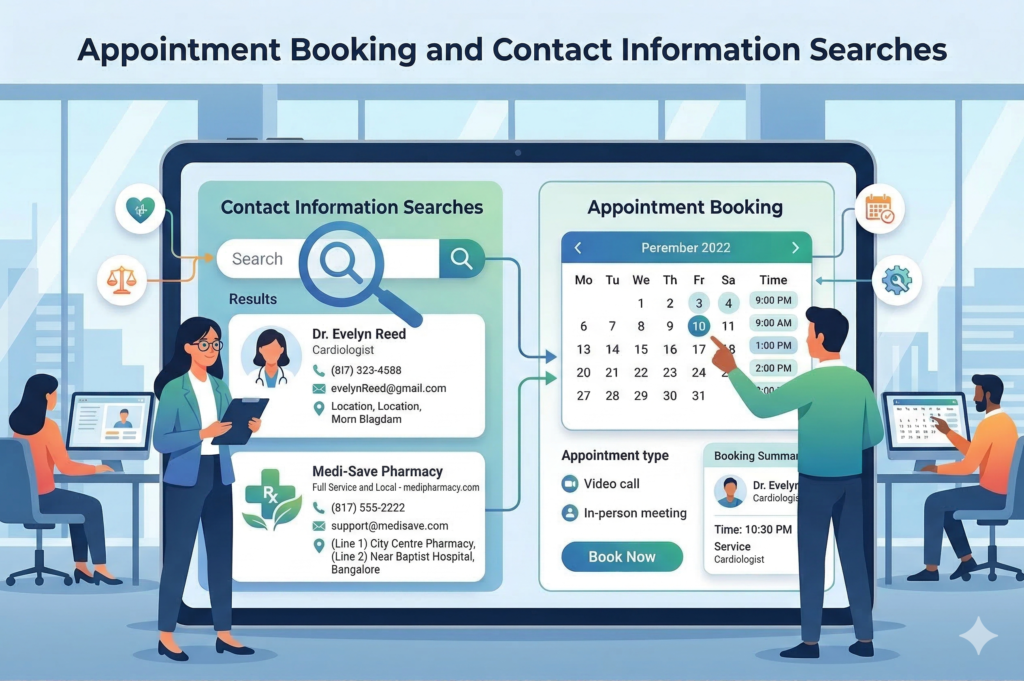
A centralized CRM integrated with appointment, billing and communication tools establishes a single source of truth for all patient interactions. This integration will give every team member access to the same current data and prevent communication mishaps. It allows a unified view of the patient experience. Healthcare CRM platforms help organizations capture patient inquiries and manage them. They automate outreach campaigns and track referral sources. These platforms manage lead-to-patient conversion and coordinate communication among teams.
Set up multi-channel appointment booking
Multiple booking options including online self-scheduling and traditional phone calls cater to different priorities while keeping operations smooth. Online scheduling provides 24/7 booking accessibility. It automates the scheduling process to free up staff time and offers increased flexibility for patients to manage appointments. Phone conversations allow direct communication with clinic staff. This provides opportunities to address patient concerns and clarify medical requirements.
Create automated follow-up sequences
Automated reminders via SMS or email keep appointments relevant in patients’ minds. They allow confirmation or rescheduling long before the date arrives. Automated reminders can substantially decrease no-show rates by informing patients about their start time and allowing easy rescheduling. Automated confirmation alerts, 48-hour pre-visit reminders and same-day arrival notification texts with easy one-click rescheduling options protect your calendar and revenue.
Reduce friction in the booking experience
Providers can reduce friction by offering multiple communication channels such as email, text messaging and video conferencing. Patients can choose the method that works best for them. Online appointment scheduling lets patients book appointments at their convenience. Healthcare providers can reduce friction by providing clear and transparent billing information. This includes online payment options and explaining insurance coverage in simple terms. Build a stronger patient acquisition system for your hospital with ASK Network’s healthcare marketing team.
Step 5: Measure, Analyze, and Scale What Works
Measurement transforms your patient acquisition strategy for hospitals from activity-based spending into accountable revenue generation. Performance tracking across every stage reveals which efforts convert searches into appointments and which drain resources without returns.
Track hospital enquiry generation metrics
Five interconnected metrics determine your hospital digital marketing performance: new patient appointments scheduled, scheduling conversion rates that show how many visitors complete booking, referral conversion rates that measure referred patients who actually schedule, review volume that indicates feedback consistency, and patient satisfaction signals that reveal experience quality. These metrics together identify breakdown points. Strong traffic with low scheduling conversion suggests friction in the booking experience. High referral volume with low conversion indicates slow or inconsistent follow-up.
Calculate conversion rates at each stage
Patient conversion rate divides completed actions by total website visitors and determines whether your approaches work. Patient acquisition cost measures total expenses converting prospects into actual patients and shows whether campaigns justify their investment. Your acquisition cost should remain below patient lifetime value to achieve positive ROI.
Identify best performing channels
Attribution connects marketing efforts to appointment outcomes. Marketing and IT must collaborate to track how individual digital channels drive bookings via phone calls or online. Multi-touch attribution provides accurate performance views. Last-click reporting misleads when patients interact across multiple touchpoints before converting. Research shows campaigns using four or more channels become 300% more effective.
Optimize budget allocation based on data
Successful practices invest 6 to 12% of gross revenue in healthcare growth strategy programs that support sustainable patient lead generation. Growth-focused hospitals allocate 10 to 15% during expansion phases and generate 2 to 3 times ROI within 18 to 24 months. Optimal distribution has 30 to 40% for paid advertising that generates immediate patient acquisition and 25 to 35% for SEO that builds long-term advantages.
Scale successful campaigns systematically
Hospitals running sustained optimization programs achieve 200 to 500% conversion rate improvements over time. One health system reduced cost per acquisition by 26% while achieving 17% new patient growth through systematic testing and optimization. Activity is different from productivity, so focus on high-impact elements rather than superficial changes. Analytical decisions enable budget reallocation based on channel performance and maximize hospital enquiry generation returns.
Conclusion
You now have a complete patient acquisition strategy for hospitals that moves beyond generic branding into measurable results. The difference between hospitals that grow and those that struggle comes down to systematic execution: department-specific targeting, trust-building digital assets, high-intent campaigns, friction-free booking processes and evidence-based optimization. Consistency matters more than perfection. Track your conversion metrics at each stage and identify what drives actual appointments rather than just traffic. Scale the channels delivering positive ROI. Build a stronger patient acquisition system for your hospital with ASK Network’s healthcare marketing team. Start with one specialty department and optimize the complete patient journey from search to booking. Expand based on performance data in a systematic way. Your patient acquisition results will improve by a lot with time.
FAQs
Q1. What is the average patient acquisition cost for hospitals? Patient acquisition cost is calculated by dividing total marketing and sales expenses by the number of new patients acquired. Successful healthcare practices typically invest 6 to 12% of gross revenue in patient acquisition programs, while growth-focused hospitals may allocate 10 to 15% during expansion phases. The key is ensuring your acquisition cost remains below patient lifetime value to maintain positive ROI.
Q2. How can hospitals reduce patient no-show rates? Hospitals can significantly reduce no-show rates by implementing automated reminder systems via SMS or email. Sending confirmation alerts, 48-hour pre-visit reminders, and same-day arrival notifications with easy one-click rescheduling options helps keep appointments top-of-mind for patients. Offering multiple communication channels and flexible rescheduling options also decreases the likelihood of missed appointments.
Q3. Why do most patients check online reviews before choosing a hospital? Approximately 94% of patients check online reviews when evaluating healthcare providers because reviews provide real patient experiences and outcomes. Nearly 75% of patients use online reviews as their first step when searching for new physicians, and 90% include reviews as part of their decision-making process. More than half of patients refuse to consider providers with average star ratings below 4.0, making online reputation a critical factor in patient acquisition.
Q4. What conversion rate should hospitals expect from their landing pages? The average healthcare landing page achieves conversion rates around 3.6%, while top-performing pages reach 7.2% or higher. The difference comes from strong user experience, clear calls-to-action, mobile optimization, and trust-focused design. Hospitals running sustained optimization programs can achieve 200 to 500% conversion rate improvements over time through systematic testing and refinement.
Q5. How should hospitals allocate their digital marketing budget for best results? Optimal budget distribution includes 30 to 40% for paid advertising to generate immediate patient acquisition and 25 to 35% for SEO to build long-term advantages. Campaigns using four or more channels become 300% more effective than single-channel approaches. Successful practices typically generate 2 to 3 times ROI within 18 to 24 months by focusing on data-driven budget allocation based on channel performance.