


AI search for private clinics has changed patient discovery. Healthcare queries trigger an AI Overview 89% of the time. Patients who see these AI-generated results click through to traditional search results only 8% of the time. Therefore, your clinic’s visibility depends on whether AI tools recognize and recommend your practice. The stakes are high for Bangalore healthcare providers. The AI healthcare market in India reached $1.6 billion in 2025. Half of all consumers use AI-powered search to research and make decisions. This move in patient search behavior demands a new approach to private clinic marketing and online visibility beyond traditional healthcare SEO strategy.
Key Takeaways
AI-powered search has fundamentally transformed how patients discover healthcare providers in Bangalore, with 89% of healthcare queries now triggering AI Overviews and only 8% of users clicking through to traditional search results.
Critical shifts Bangalore healthcare providers must understand:
• AI makes decisions, not displays options: 39.7% of patients now use AI directly for healthcare research, and when AI doesn’t mention your clinic, you become invisible to these patients who trust AI-generated results 52.8% of the time.
• Consistency across platforms is non-negotiable: Your clinic’s name, address, and phone number must appear identically everywhere online—41% of businesses display inconsistent listings, which directly suppresses local search rankings and erodes patient trust.
• Review recency trumps volume: 66% of patients factor in both star rating and recency when evaluating providers, with 40% considering reviews older than 1-2 years irrelevant—fresh reviews signal active, consistent care delivery.
• Schema markup drives AI visibility: 92% of top search results incorporate schema markup, and pages using it see 82% higher click-through rates—implement MedicalOrganization, IndividualPhysician, and FAQPage schemas to help AI understand your expertise.
• Mobile-first, younger patients rely heavily on AI: Patients aged 18-38 are twice as likely to read online reviews and show 3.65 times greater odds of using AI tools for provider research compared to older demographics.
The window for early adoption remains open, but clinics that establish AI visibility now gain a substantial competitive advantage over those waiting. Start by ensuring consistent listings, implementing proper schema markup, and building systematic review collection processes to make your practice recognizable to the AI systems that patients increasingly trust for healthcare recommendations.
Understanding AI search and why it matters for healthcare providers

What AI search means for private clinic marketing
Patients who ask ChatGPT or Google’s AI which cardiologist to visit in Indiranagar receive direct recommendations instead of a list of search results. AI in healthcare marketing operates differently now. Traditional search engines display options while AI tools make decisions. The difference matters because 39.7% of patients now use AI for healthcare research. Your clinic becomes invisible to these patients when AI doesn’t mention you.
Private clinic marketing strategies built around ranking on Google’s first page no longer guarantee patient discovery. Each AI platform pulls data in its own way and maintains unique criteria for recommendations. ChatGPT blends information from training data and real-time web searches, looking at your overall web presence that has directory listings and patient reviews. Google AI Overviews draws from its search index and local business data. Perplexity relies on citations from Yelp, Zocdoc, and Healthgrades through direct API partnerships. Your clinic needs visibility in all these data sources because 52.8% of users trust AI-generated results, and 55.3% feel comfortable with AI ranking providers.
How AI tools decide which clinics to recommend
AI search engines don’t rank websites through traditional algorithms. They evaluate whether they have enough credible, structured information about your practice to recommend it with confidence. A patient asks about the best gastroenterologist in Koramangala for IBS treatment. The AI isn’t searching for keywords on your website. It’s assessing whether your provider data has clear specialties, conditions treated, procedures performed, locations, and insurance details.
Patient reviews carry more weight in AI recommendations than traditional search. AI tools prioritize patient experience data when answering questions about the “best” provider for specific conditions. A dermatologist with 200 recent reviews discussing treatment outcomes receives far stronger consideration than one with 15 reviews from three years ago. Review recency signals that your practice remains active and patients continue choosing your services.
Consistency determines whether AI tools trust your information. Minor discrepancies that Google might overlook become important barriers for AI engines. Your subspecialty appears different on your website, in directory listings and on insurance platforms. AI struggles to determine accurate information. Outdated details signal questionable data quality and reduce your likelihood of receiving recommendations.
The move from keywords to entity recognition
The medical information landscape has moved from keyword matching to semantic understanding. Conventional keyword searches depend on researchers’ vocabulary aligning with terms in titles and abstracts. This limitation prevents the discovery of relevant content using an alternative language. AI-powered tools employ natural language processing to assess conceptual relationships and full-text similarities. They retrieve information aligned with search intent even when specific terms are absent.
Named Entity Recognition (NER) enables AI to identify and categorize medical entities like patient names, conditions, treatments, and symptoms from unstructured text. AI recognizes entities such as diseases and procedures to make information extraction effective beyond simple text matching. This technology transforms how AI understands your clinic’s expertise. It moves from detecting keywords like “cardiology” to comprehending relationships between your doctors, their subspecialties, treated conditions, and patient outcomes.
Vector search technology converts words and phrases into numerical representations. AI can grasp context and intent behind queries. This approach understands language nuances that have synonyms and related concepts that traditional methods miss. Online visibility for clinics now depends on AI’s ability to recognize your practice as a credible medical entity with clear expertise areas, not just a website containing relevant keywords.
Patient search patterns in Bangalore’s healthcare market

How patients find clinics today versus two years ago
Mobile devices now drive over 70% of all health-related searches in India. ‘Near me’ and voice-based queries have grown 42% year-over-year. Patients search while commuting, during lunch breaks or right after symptoms appear. This mobile-first behavior has compressed the decision timeline. A patient who searches “dermatologist near Whitefield” expects to see clinic locations, read reviews, check availability and book an appointment within minutes.
Bangalore patients demonstrate intensive research patterns, 72% search online to review providers before scheduling an appointment. Bangalore patients consult an average of five or more sources before making their final decision. This reflects the city’s tech-savvy demographic that approaches healthcare decisions with the same thoroughness they apply to professional research.
The patient experience now follows a predictable digital path. 77% of patients use search engines before booking appointments instead of calling clinics. They scan Google Maps for top-rated clinics and read patient testimonials across multiple platforms. They visit clinic websites to verify credentials and services, then choose booking methods that minimize phone calls. Patient discovery has become local, search-led and review-influenced.
The rise of AI-powered health queries in India
AI adoption for healthcare research has accelerated faster than most providers predicted. 19.2% of adolescents and young adults now use AI chatbots for mental health advice. The percentage increases with age and reaches 22.2% among those aged 18 to 21 years. These patients find AI chatbot advice helpful. 91.7% rate the guidance as somewhat or very helpful.
Frequency of use indicates AI has become a regular healthcare resource rather than occasional experimentation. 42.8% of those who consult AI chatbots for health advice do so at least monthly. This regular engagement signals a fundamental move in patient search behavior where AI serves as a preliminary consultation tool before patients contact actual providers.
Why younger patients rely on AI recommendations
Age creates a sharp divide in healthcare discovery methods. Patients aged 18 to 38 years show twice the likelihood of reading online reviews when choosing physicians compared to older patients. Younger patients demonstrate a higher probability of using online resources during their provider search. Those aged 18 to 21 years show 3.65 times greater odds of using AI tools compared to those aged 12 to 14 years.
The appeal centers on accessibility and privacy. AI provides immediate responses without appointment scheduling and costs nothing to consult. It offers anonymity that younger patients value when researching sensitive conditions. Even when these patients book appointments with real providers, their original research and provider shortlist come from AI recommendations. Clinics invisible to AI search miss this entire patient demographic during their critical discovery phase.
Building your clinic’s AI visibility foundation
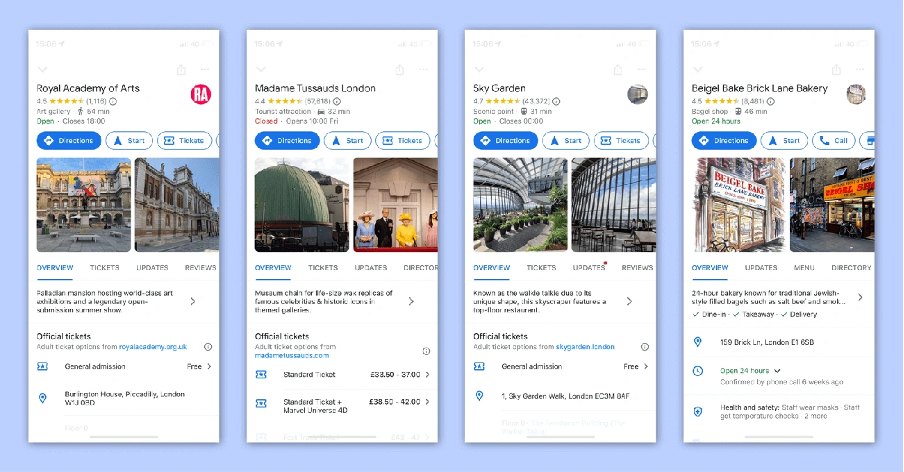
Creating consistent clinic listings across the web
Your clinic’s name, address and phone number must appear the same across every online platform. Research shows that 41% of businesses display inconsistent listings, which suppresses local search rankings. Search engines treat these as separate entities when your practice name varies between “Dr. Sharma’s Clinic” on one directory and “Sharma Medical Center” on another. 80% of consumers distrust businesses with inconsistent contact details.
Address formatting needs precision. Decide whether you’ll write “3rd Floor, Tower A” or “Floor 3, Bldg A” and maintain that exact format everywhere. Phone numbers need the same attention. Choose one format like +91-80-12345678 or (080) 1234-5678 and stick with it across your website footer, Google Business Profile, Practo, Justdial and every healthcare directory where your clinic appears. Minor variations that seem insignificant to humans create conflicting signals. These reduce how confidently search platforms present your clinic.
Setting up proper healthcare schema markup
Schema markup provides machine-readable context that helps AI understand your clinic’s expertise. 92% of top search results use schema markup, SEMRush reports. Pages using schema to encourage rich results see an 82% higher click-through rate than pages without it. This is a big deal. Healthcare organizations should implement the MedicalOrganization schema for their homepage, the IndividualPhysician schema for doctor profiles and the MedicalCondition schema for service pages. Each schema type uses properties that define relationships. Physician schemas should include hospitalAffiliation, medicalSpecialty, hasCertification, hasCredential and knowsAbout properties to show expertise.
You need to add JSON-LD code to your website’s backend. Google’s Rich Results Test tool verifies correct implementation. Beyond simple schema, link your entities to external knowledge bases like Wikidata and Google’s Knowledge Graph. This entity linking helps AI understand term meanings and verifies your practice’s legitimacy.
Establishing your doctors as credible medical entities
AI reviews a doctor’s credibility through structured credential data. Your physician pages need schema markup highlighting medical degrees, board certifications, hospital affiliations, years in practice and published research. An author schema on blog content signals to Google that an MD or medical professional wrote the material. This significantly improves rankings for healthcare content.
Use properties such as hasCertification, award and medicalSpecialty throughout your markup. These elements add to Experience, Expertise, Authoritativeness, and Trustworthiness (E-E-A-T) signals that Google prioritizes for medical content classified under “Your Money Your Life” topics.
Maintaining accurate Google Business Profile data
A complete Google Business Profile with accurate hours and a verified address outperforms incomplete profiles. Google sends a postcard with a verification code to your facility address. Only then can you control your profile. Businesses with complete information are twice as likely to be thought of as reputable, Google reports.
Update your profile beyond the simple fields. Add specific services offered, accepted insurance plans, payment methods and parking availability. A 2025 survey found 59% of healthcare consumers used online search to find primary care providers. 90% said accurate information in online listings was critical for establishing trust. Treat your profile as an operational asset that needs monthly reviews rather than a one-time setup task.
Content strategy for AI-powered patient discovery

Writing FAQ content that AI tools extract and cite
FAQ structured data achieves one of the highest citation rates in AI-generated answers. Pages implementing the FAQPage schema appear 3.2 times more likely to surface in Google AI Overviews compared to pages without this markup. The format arranges perfectly with how patients query AI tools naturally, asking complete questions rather than typing keyword fragments.
Optimal answer length matters substantially to extract successfully. AI systems prefer responses between 40 and 60 words. This length provides sufficient context without overwhelming the extraction algorithm. Each answer must stand alone and make sense independently, since AI platforms extract individual question-answer pairs without surrounding content. Write answers in a neutral, authoritative tone rather than promotional language. Include specific dates and statistics to increase factual authority.
Structuring service pages to extract direct answers
Patients search for symptoms and conditions, not service line terminology. Structure your pages around how patients think. To name just one example, instead of “Cardiology Services,” use headings like “When should I see a doctor for chest pain?” This patient-centric language increases the likelihood that your content surfaces in AI conversations.
Answer the biggest patient question within your first paragraph. Short sections with descriptive headings help AI extract key information and build coherent responses. Use proper heading hierarchy where H2 introduces main topics, and H3 covers subtopics. This creates semantic relationships that are clear.
Using natural language patient questions as a content framework
Structure content around actual patient queries. Patients ask, “Why is my ankle swollen when I wake up?” rather than searching for “podiatry swelling causes”. This conversational phrasing matches voice search patterns and AI query formats. Question-based headlines position your organization as a trusted information source on specific patient concerns.
Adding medical credentials and reviewer information
Medical reviewers ensure content accuracy and build trust with both patients and AI systems. Include reviewer name, credentials, specialty, and review date. Author bylines build trust while credentials build authority. Display your doctors’ degrees, board certifications, years in practice, and hospital affiliations to strengthen E-E-A-T signals that AI prioritizes for medical content.
Managing reviews and reputation for AI search

Why review recency matters more than volume
Patient decision-making prioritizes when feedback was posted over how much exists. 66% of patients factor in both average star rating and recency when they evaluate providers. Fresh reviews signal that your practice remains active and delivers consistent care today, not in the past. More telling, 40% of patients think reviews older than one to two years are irrelevant. 80% of patients have visited a provider within the last quarter, which means the window to capture timely reviews remains constant but narrow. Providers who fail to automate post-visit feedback outreach within 24 to 72 hours leave most review volume uncaptured.
How to get verified patient testimonials on the right platforms
Verified patient reviews create a more accurate representation because they tie to confirmed patient visits rather than anonymous submissions. Testimonials act as social proof and build patient trust. Healthgrades verifies all patient reviews to ensure submission by real patients with feedback related to their care experience. Multiple platform presence matters, as modern patients compare review sources before they choose providers.
How responding to reviews signals an active practice
Response activity influences patient choice. Studies show 59.48% of patients prefer providers who respond to both positive and negative reviews. Prompt replies demonstrate involvement, appreciation and accountability. Avoid sharing protected health information beyond what the commenter disclosed, as HIPAA guidelines require. Brief, professional acknowledgments work better than lengthy responses.
Common review collection mistakes to avoid
Never post fake reviews, as this violates ethical standards and endangers patients who make medical decisions. Google prohibits review-gating practices where you solicit only positive reviews. Businesses running illegal review schemes risk having all reviews removed. 44% of patients report never being asked for reviews, which represents lost opportunities.
Conclusion
Your clinic’s visibility in AI search will determine whether Bangalore’s tech-savvy patients find your practice. The change has already happened. Half of healthcare consumers now use AI-powered search, and traditional SEO tactics no longer guarantee patient discovery. Start with the fundamentals. Clean up your clinic listings across platforms and implement proper schema markup. Build a consistent review collection process. These foundational steps make your practice recognizable to AI systems that patients trust for healthcare recommendations.
The chance window remains open, but early adopters gain a substantial advantage. Patients searching for healthcare providers today expect AI-generated recommendations. Your clinic either appears in those results or remains invisible to an entire generation of potential patients.
FAQs
Q1. How is artificial intelligence being used in healthcare clinics today? AI in healthcare clinics analyzes complex medical data to diagnose, treat, and prevent diseases. It augments human capabilities by providing faster and more accurate ways to understand patient information, often exceeding traditional methods in identifying patterns and recommending treatment approaches.
Q2. Are there AI-powered search engines specifically for medical research? Yes, PubMed.ai is an AI-assisted literature search tool designed to help healthcare professionals and researchers find and explore information from biomedical research. It uses artificial intelligence to make medical literature searches more efficient and comprehensive.
Q3. Why do younger patients prefer using AI for healthcare recommendations? Younger patients aged 18-38 are twice as likely to use AI and online resources when choosing healthcare providers. They value the immediate responses, cost-free access, and anonymity that AI tools provide, especially when researching sensitive health conditions before booking appointments.
Q4. How often should clinics update their online information for AI visibility? Clinics should review and update their Google Business Profile and online listings monthly. Accurate, consistent information across all platforms is essential, as 90% of healthcare consumers consider accurate online listings critical for establishing trust when choosing a provider.
Q5. What makes patient reviews important for AI search recommendations? AI tools prioritize recent patient reviews when recommending healthcare providers. Review recency signals an active practice with current patient experiences, and 66% of patients consider both star ratings and how recent the reviews are when making their decision. Reviews older than one to two years are considered irrelevant by 40% of patients.