


Your clinic website conversion might be costing you patients silently. Here’s why: 77% of patients begin their healthcare trip online and search for symptoms and nearby clinics before making contact. Yet most clinic websites struggle to turn those visitors into actual inquiries.
The numbers tell the story. The average medical website conversion rate sits at just 4.2%. This means 95 out of every 100 visitors leave without taking action. But here’s the encouraging part: clinics that focus on optimizing patient inquiry generation have seen impressive results and a 68% increase in new patients. One practice even added 224 more patient visits per month within a year. You’ll find what’s stopping your clinic website design from converting visitors in this piece and learn practical steps to fix it.
Key Takeaways
Most clinic websites struggle with conversion, not traffic. With 77% of patients starting their healthcare journey online but average medical website conversion rates at just 4.2%, the real challenge is turning visitors into patient enquiries.
Critical conversion barriers to address:
- Simplify your messaging – Replace medical jargon with patient-friendly language that matches how people actually search for care (use “Knee Pain” instead of “Orthopedics”)
- Optimize for mobile first – 61% of users leave immediately if they can’t find what they need on mobile; ensure forms work seamlessly on phones
- Track what matters – Set up conversion tracking for form submissions, phone calls, and appointment bookings to identify exactly where potential patients drop off
- Build trust strategically – Display doctor credentials, patient testimonials, and reviews near booking buttons to answer the unspoken question: “Can I trust this clinic?”
- Make contact effortless – Place multiple contact options (phone, email, booking buttons) on every page with high-contrast, action-oriented CTAs like “Book Appointment”
- Speed up your site – Enable caching, compress images, and implement lazy-loading to prevent visitors from abandoning slow pages
The encouraging reality: Clinics focusing on conversion optimization have achieved a 68% increase in new patients, with some adding 224+ patient visits monthly. The solution isn’t driving more traffic, it’s removing the friction that stops visitors from becoming patients.

Common Problems That Stop Clinic Websites From Generating Patient Enquiries
Most clinic websites receive traffic but fail at a simpler task: giving visitors a clear reason to make contact. The issue stems from visitor volume alone rarely. Something fundamental isn’t working. Unclear messaging creates the first barrier. Patients scan pages quickly to confirm they’ve found the right clinic to match their specific condition. Generic content forces them to interpret whether you treat what they need. A services page listing procedures as bullet points functions as a menu, not a conversion tool. Patients searching to find a specific treatment need information that helps them decide if your clinic suits their particular case.
Mobile experience determines whether most visitors stay long enough to read anything. Text requiring zoom signals an outdated site. Forms designed for desktop keyboards frustrate phone users. Many abandon the process. Poor mobile optimization loses more than half your potential contacts, as 61% of users move to another site when they don’t find what they need immediately on mobile. Trust signals answer the unspoken question patients ask before making contact: can they rely on your clinic? Patient testimonials represent the most persuasive trust element because they reflect experiences of those who already made the same decision. Missing doctor profiles and credentials leave patients uncertain about choosing your practice.
Setting Up Conversion Tracking to Understand Visitor Behavior
Tracking clinic website conversion requires more than monitoring visitor numbers. You need to understand which actions visitors take and where they abandon the process. Google Analytics 4 uses event-based tracking to capture specific interactions like form submissions and button clicks on your clinic website. Proper setup means you can see where potential patients drop off before making contact. Create a Google Analytics property for your website and add the tracking code to each page. The implementation takes up to 30 minutes before data appears. Clear conversion goals that line up with patient inquiry generation need definition, whether that’s appointment booking forms, contact submissions, or phone calls.
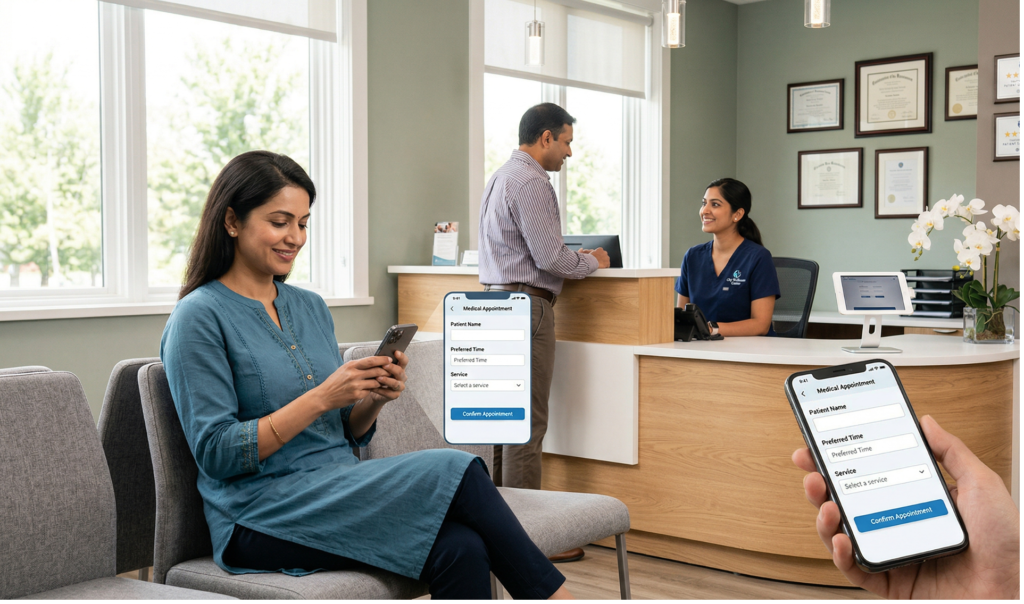
Call tracking deserves separate attention because phone inquiries remain a main conversion point for clinics. Standard analytics platforms tell you how many call button clicks occurred, whereas call tracking software reveals which calls resulted in actual booked appointments. This difference matters substantially. Analysis of 278,000 healthcare guides showed only 39.9% of marketing-sourced inquiries ever book appointments. Without call tracking, you cannot identify which marketing channels drive genuine patient conversions versus simple inquiries. Session recordings and heatmaps show how visitors interact with your pages. These tools reveal rage clicks on non-interactive elements and form abandonment at specific fields. They pinpoint friction points that prevent conversions.
Step-by-Step Guide to Improve Clinic Lead Generation From Your Website
Better clinic lead generation begins with simple navigation. Replace medical terminology with patient-friendly language. Use “Ear, Nose, and Throat” instead of listing “Otolaryngology.” “Nephrology” becomes “Kidney Care.” This move arranges your clinic website design with how patients search for care. Most healthcare websites list generic services while patients search using symptom-based terms like “knee pain” instead of “Orthopedics”.
Every page needs visible contact information and booking options, not just your homepage. Place phone numbers, email addresses and appointment buttons in headers and footers. Position your primary call-to-action button using high-contrast colors that stand out from surrounding elements. The button should use action-oriented text like “Book Appointment” rather than vague labels like “Submit”.
Page speed affects whether visitors stay long enough to convert. Enable caching to serve stored page versions instead of generating content from databases repeatedly. Compress images using WebP format and implement lazy-loading so images load only when visitors scroll to them. These technical improvements affect medical website conversion rates directly. Trust signals throughout your website reinforce credibility. Display physician credentials, board certifications and patient testimonials near booking CTAs. AI chatbots handle appointment scheduling and patient questions around the clock. They allow self-booking through WhatsApp or your website without staff involvement. Need help turning clinic website visitors into patient questions? Explore ASK Network’s healthcare digital marketing services.
Conclusion
You have a clear roadmap to reshape your clinic website from a passive visitor counter into an active patient enquiry generator. The solution isn’t more traffic. It’s removing friction points that stop visitors from taking action. Focus on simplifying navigation and building trust through testimonials and credentials while speeding up your pages. Track your conversions to see what works. Need help turning clinic website visitors into patient enquiries? Explore ASK Network’s healthcare digital marketing services.
FAQs
Q1. What are the main reasons clinic websites fail to convert visitors into patients? Most clinic websites struggle with unclear messaging that doesn’t address specific patient needs, poor mobile experience, missing trust signals like patient testimonials and doctor credentials, lack of clear calls-to-action, and slow page loading speeds. These issues cause visitors to leave without making contact, even when they’re actively searching for healthcare services.
Q2. How can I track whether my clinic website is actually generating patient enquiries? Set up Google Analytics 4 to monitor specific actions like form submissions and appointment requests. Implement call tracking software to identify which phone enquiries result in actual booked appointments. Use session recordings and heatmaps to see where visitors abandon forms or struggle with navigation. These tools help you understand visitor behavior and identify conversion barriers.
Q3. What’s the most effective way to improve my clinic’s website conversion rate? Start by simplifying navigation with patient-friendly language instead of medical jargon. Place contact options and booking buttons prominently on every page using high-contrast colors. Optimize page speed through image compression and caching. Display trust signals like physician credentials and patient testimonials near booking CTAs, and ensure your website works seamlessly on mobile devices.
Q4. Why is mobile optimization so important for clinic websites? 61% of users will move to another website if they don’t immediately find what they need on mobile. Most patients begin their healthcare search on smartphones, and if your website requires zooming to read text or has forms difficult to complete on mobile, you’re losing more than half your potential enquiries before they even consider contacting you.
Q5. How can I tell if my marketing campaigns are bringing quality patient leads? Track beyond just clicks and website visits. Monitor which enquiries actually convert into booked appointments, as research shows only about 40% of marketing-sourced healthcare enquiries result in scheduled appointments. Use call tracking to identify which marketing channels drive genuine patient conversions versus simple enquiries that don’t lead to appointments.